

Contact us
If you are interested in cooperation, please contact us immediately, we will give you feedback as soon as possible!


11
2026
-
06
Lead Screw Actuator Demand Accelerates as Compact Precision Motion Gains Ground
Author:
The industrial automation landscape is witnessing a steady but significant shift as engineers rediscover the lead screw actuator for applications where controlled low-speed positioning and holding torque matter more than raw throughput. Unlike their ball screw counterparts,
The industrial automation landscape is witnessing a steady but significant shift as engineers rediscover the lead screw actuator for applications where controlled low-speed positioning and holding torque matter more than raw throughput. Unlike their ball screw counterparts, the lead screw actuator offers inherent self-locking capability, quieter operation, and a materially lower cost of entry—advantages that are proving decisive in vertical lift axes, adjustable workstations, and collaborative robot end effectors.
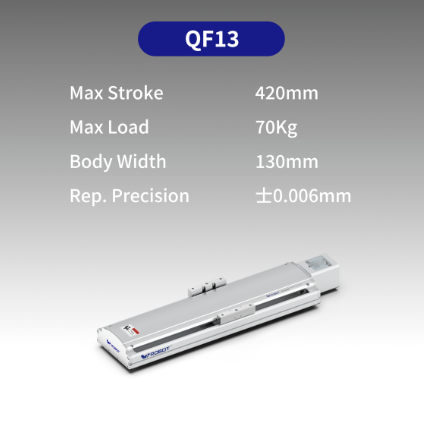
Recent market analysis projects that global demand for the lead screw actuator will expand at a compound annual rate of 6.2% through 2030, fueled by the rapid proliferation of pick-and-place machines, 3D printers, and semiconductor handling equipment. This growth trajectory reflects a broader industry realization: not every precision motion axis requires the complexity and expense of recirculating ball bearings. A well-designed lead screw actuator achieves positioning repeatability within ±10 micrometers while consuming significantly less power during static load holding, thanks to its sliding contact interface.
Innovations in polymer nut technology have fundamentally reshaped what engineers can expect from a modern lead screw actuator. New formulations incorporating internally lubricated thermoplastics have extended service life beyond 15,000 kilometers of travel while eliminating external grease requirements—a critical advantage for cleanroom environments and medical device assembly lines. Additionally, IP-rated sealed versions are now widely available, allowing the same actuator to perform reliably in dusty packaging facilities or humid food processing zones.
Smart factory integration is also arriving for the lead screw actuator. Suppliers are beginning to embed magnetic encoders and temperature sensors directly into compact housings, enabling real-time wear monitoring and predictive maintenance. This democratization of condition monitoring, combined with NEMA-compatible motor mounts and modular rail kits, has reduced deployment time from weeks to hours.
As Industry 4.0 pushes for decentralized, energy-efficient actuation across millions of lower-speed axes, the lead screw actuator stands as the pragmatic backbone of cost-sensitive automation. Analysts conclude that while ball screws will retain their high-performance stronghold, the lead screw actuator remains the indispensable workhorse for precision linear motion on a budget.
lead screw actuator

HIGH-TECH ENTERPRISE
AUTOMATED PRODUCTION
Contact Us
> Whatsapp: +86 13360462722
> Email: [email protected]
> Address: 9th Floor, Zone C, Songhu Zhigu
Industrial Building, No. 9 Yanhe South Road, Liaobu
Town, Dongguan City
China Site: wrobot.top · Linear Module Factory & Online Quote
China Site: wrobot.top · Linear Module Factory & Online Quote
Copyright © 2025 ShenZhen W-Robot Industry Co.,Ltd. All Rights Reserved.