

Contact us
If you are interested in cooperation, please contact us immediately, we will give you feedback as soon as possible!


08
2025
-
12
High-Rigidity Linear Modules for Heavy Loads: What to Focus On
Author:
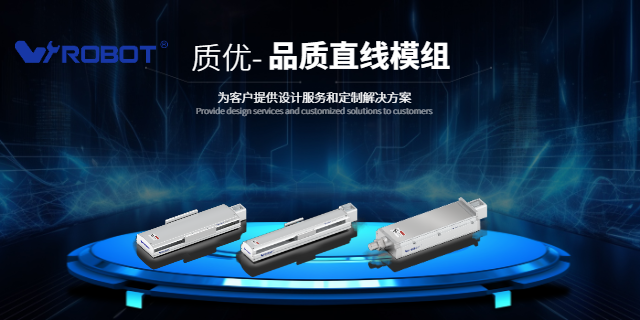
When your axis has to carry a big fixture, a vision frame or a robot gripper, “generic” linear modules are no longer enough. You need a heavy load linear module with real bending resistance, good support for overhung loads and reliable protection against dust, chips or oil mist. Inside W-Robot’s ball screw family, this typically means three series: VC Series – Anti-torsion, heavy-load ball screw modules VF Series – Anti-torsion modules with a wide size ladder and long strokes VGTH Series – Fully enclosed ball screw modules, designed for demanding environments and clean applications Shenzhen W-robot Industry Co., Ltd. +1 All three use a ball screw drive plus linear guide rail support, but they are optimised for different priorities. This guide explains how to choose between them when you design a high rigidity linear stage for automation equipment.
1. Where VC, VF and VGTH Sit in the Product Map
From W-Robot’s product tree, the positioning is roughly: W-Robot+1
VC Series – “Anti Torsion, Heavy Load” ball screw linear modules. Cross-sections and bearings are reinforced for high rigidity, especially for side-mounted payloads. Good match for clean or semi-clean environments such as battery, semiconductor and 3C assembly lines.
VF Series – “Anti Torsion, Complete Specifications.” A broad ladder from VF6 up to VF27 with strokes up to around 1200 mm, covering many linear module for automation tasks where you need both load capacity and longer travel. W-Robot+1
VGTH Series – “Easy Installation, New Arrivals,” but under the hood it is W-Robot’s fully enclosed linear module line: integrated linear bearings plus sealed covers so the screw and guides are protected from metal dust, oil mist and other contamination. Shenzhen W-robot Industry Co., Ltd.+2
All three are built as servo motor linear modules by default, but can also be combined with stepper motors or integrated motor-and-driver units depending on your motion controller and budget.
2. VC Series – For Maximum Rigidity in Compact, Clean Installations
If your first concern is stiffness under heavy, off-centre loads, start by looking at the VC series.
2.1 Structural focus
Public descriptions of VC highlight:
“Strong deformation resistance for side-mounted payload”
High-rigidity body with integrated linear bearings
Size range VC6, VC8, VC10, VC12, VC14, VC17, VC22
In practice, that means VC is a good fit when:
The carriage supports a tall fixture, robot gripper or electric cylinder
You mount the heavy load linear module vertically or sideways on a frame
You want a compact yet stiff axis in an XYZ linear module platform, 2-axis gantry stage or multi-axis linear actuator system
2.2 Typical use cases
Battery and EV lines – lifting or positioning heavy modules in a linear actuator for battery production line
Semiconductor and 3C electronics – short to medium strokes where high rigidity and low deflection are important for precision tools or inspection heads (for example, a linear module for semiconductor equipment under a vision system)
Cleanroom or low-contamination environments – VC is also marketed in a cleanroom version, so if you need a stiff axis inside a clean enclosure, VC is usually preferred over open VF.
If stroke is not extremely long and environment is relatively clean, VC often becomes the default choice for a high rigidity linear stage.
3. VF Series – Heavy Loads plus Longer Travel and Size Options
Where VC emphasises stiffness in compact frames, VF series provides a broad range of sizes and longer strokes.
3.1 What makes VF different
From the VF tag page we see: VF6 modules reach strokes up to about 1200 mm with 60 mm body width, and the series scales up through VF8, VF10, VF12, VF14, VF17, VF22 and VF27. W-Robot+1
Key implications:
More stroke options: suitable for gantries and transfer axes where travel exceeds what VC or VGTH typically offer.
Complete specifications: multiple body widths and screw leads, making it easier to do precise linear actuator sizing from light to heavy payloads.
3.2 Where VF fits best
Choose VF when you need:
A heavy load linear module that travels 600–1200 mm along a beam, for example in:
pallet transfer
mid-range linear module for photovoltaic production line
X-axis of an 3-axis linear motion system with long stroke
A standardised family that you can reuse across different machines—VF’s wide size ladder is helpful if you want the same mechanical concept on several payload levels.
Good stiffness, but your environment is not extremely dusty or oily (for harsh environments you’d move towards VGTH).
VF is common in linear module for automation projects where you combine it with vertical electric cylinders or Z-axes, building multi-axis structures that carry sizeable jigs and fixtures.
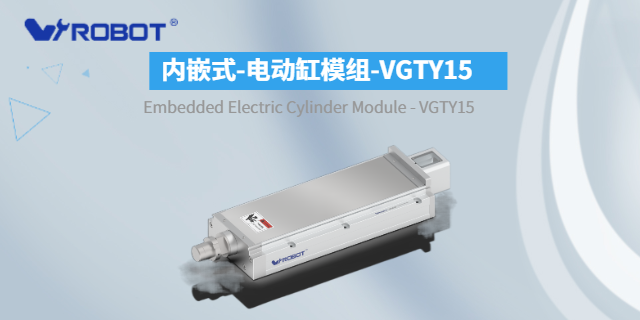
4. VGTH Series – Heavy-Load, Fully Enclosed for Tough or Clean Environments
When the environment becomes the bottleneck—oil mist, fine powder, aluminium chips or strict cleanliness—the VGTH series is usually the right answer.
4.1 Enclosed design
According to W-Robot’s own blog, VGTH is not just a standard axis with a cover added: it is a redesigned structure where sealing and precision are engineered together.
Characteristics:
Built-in enclosure around the ball screw drive and linear guide rail
Available in variants VGTH4, VGTH5, VGTH8, VGTH12, VGTH15, VGTH20 etc.
Designed to act as a dustproof linear module and, in clean environments, as a cleanroom linear module with minimal particle generation
In other words, VGTH is W-Robot’s IP-rated linear actuator family for ball-screw-based systems.
4.2 Where VGTH makes sense
Machining, welding and cutting stations – chips, dust and welding fumes would quickly damage an open VF or VC; VGTH’s sealed covers protect the screw and guides.
Precision assembly in controlled environments – bonding, imaging or inspection stations where you want the benefits of a fully enclosed linear module even inside a cleanroom.
Production lines for batteries, PV and medical devices – many customers use VGTH as the main axis in linear actuator for medical device automation, linear module for photovoltaic production line or cell handling, where contamination control is critical.
VGTH will usually be a little larger and heavier than an open VF or VC of the same load class, but the trade-off is better protection and longer life in harsh conditions.
5. Five Parameters to Compare When Choosing Between VC, VF and VGTH
Instead of guessing, you can use a simple five-point checklist.
5.1 Load and moments
If your main concern is rigidity under high side-loads or tall fixtures, VC or the larger VF sizes are your primary candidates.
Use VC when the axis is compact but sees strong side loads (for example, a vertical stage carrying a large robot gripper).
Use VF when you need similar load capability over longer strokes.
5.2 Stroke length
Up to ~600 mm: all three families are options; pick based on rigidity and environment.
600–1200 mm: VF is usually more appropriate; this is where its “complete specifications” shine.
Very short strokes but dirty environments: VGTH gives you enclosure plus heavy-load capability.
5.3 Environment and protection
Clean or mildly dusty → VC or VF (open body, easier to clean, compact).
Chips, oil, fine powder, or strict cleanliness rules → VGTH as your dustproof linear module / fully enclosed linear module.
If your machine requires formal IP-rated linear actuators, VGTH is normally the starting point, with extra covers or bellows around any auxiliary axes.
5.4 Integration into multi-axis systems
For a rigid XYZ linear module platform or 2-axis gantry stage, a common pattern is:
X/Y with VF or VC (depending on stroke)
Z with a VZ electric cylinder or a smaller VC/VF model
For lines with many identical cells, keeping one family (all VC or all VF) simplifies spares and troubleshooting linear actuator issues later.
5.5 Servo / stepper and control
All three series can be driven by:
Servo motors → for higher speed, better synchronisation and force control
Steppers → for lower-cost axes in non-critical stations
Integrated motor and driver packages → when cabinet space is tight
When you design your motion controller layout, check inertia ratios and speed targets; heavy-load axes often benefit from the torque reserve of a servo solution, especially in battery or PV lines where cycles run continuously.
6. Example Selection Scenarios
Scenario 1 – Heavy fixture on a short stroke, clean environment
Task: position a 40 kg fixture under a camera within 300 mm travel in a linear module for 3C electronics line.
Needs: high stiffness, minimal deflection, relatively clean environment.
Recommendation: VC series (for example VC12/VC14) as a high rigidity linear stage; pair with a servo motor for smooth motion.
Scenario 2 – Long travel gantry in a battery line
Task: X-axis for 900 mm travel, carrying a Z-axis with a gripper; used as a linear actuator for battery production line.
Needs: long stroke, heavy load, moderate contamination.
Recommendation: VF series (VF14 or above) for X; smaller VF/VC or electric cylinder for Z. This combination gives enough stiffness with the stroke flexibility VF provides.
Scenario 3 – Precision handling in a dusty welding cell
Task: move a welding sensor and small robot gripper over 400 mm in a cell where spatter and fumes are present.
Needs: contamination resistance, reliable stroke, good rigidity.
Recommendation: VGTH series in a size that matches the payload (for example VGTH8 or 12). Its enclosed design protects the ball screw and support bearings, reducing maintenance compared with open modules.
7. Quick Decision Table
| Priority | First series to check | Notes |
|---|---|---|
| Highest rigidity, short/medium stroke | VC series | Heavy load, side-mounted payloads, clean or semi-clean areas |
| Heavy load + longer stroke range | VF series | Gantries, transfer axes, flexible sizing ladder |
| Heavy load + harsh / clean environment | VGTH series | Fully enclosed, dust/oil protection, cleanroom options |
If you keep this table in mind and always start from load/moments → stroke length → environment, choosing between VC, VF and VGTH becomes a structured engineering decision instead of guesswork.
From there, you can fine-tune screw leads, motor sizes and options such as linear actuator for pick and place tooling, custom linear actuator brackets or OEM combinations—while staying within one consistent ecosystem from a single linear module manufacturer.
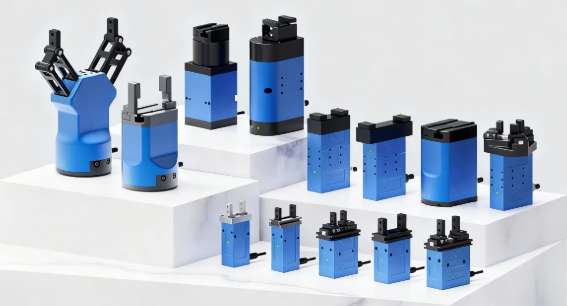
robot gripper , electric cylinder ,linear guide rail ,ball screw drive ,timing belt drive
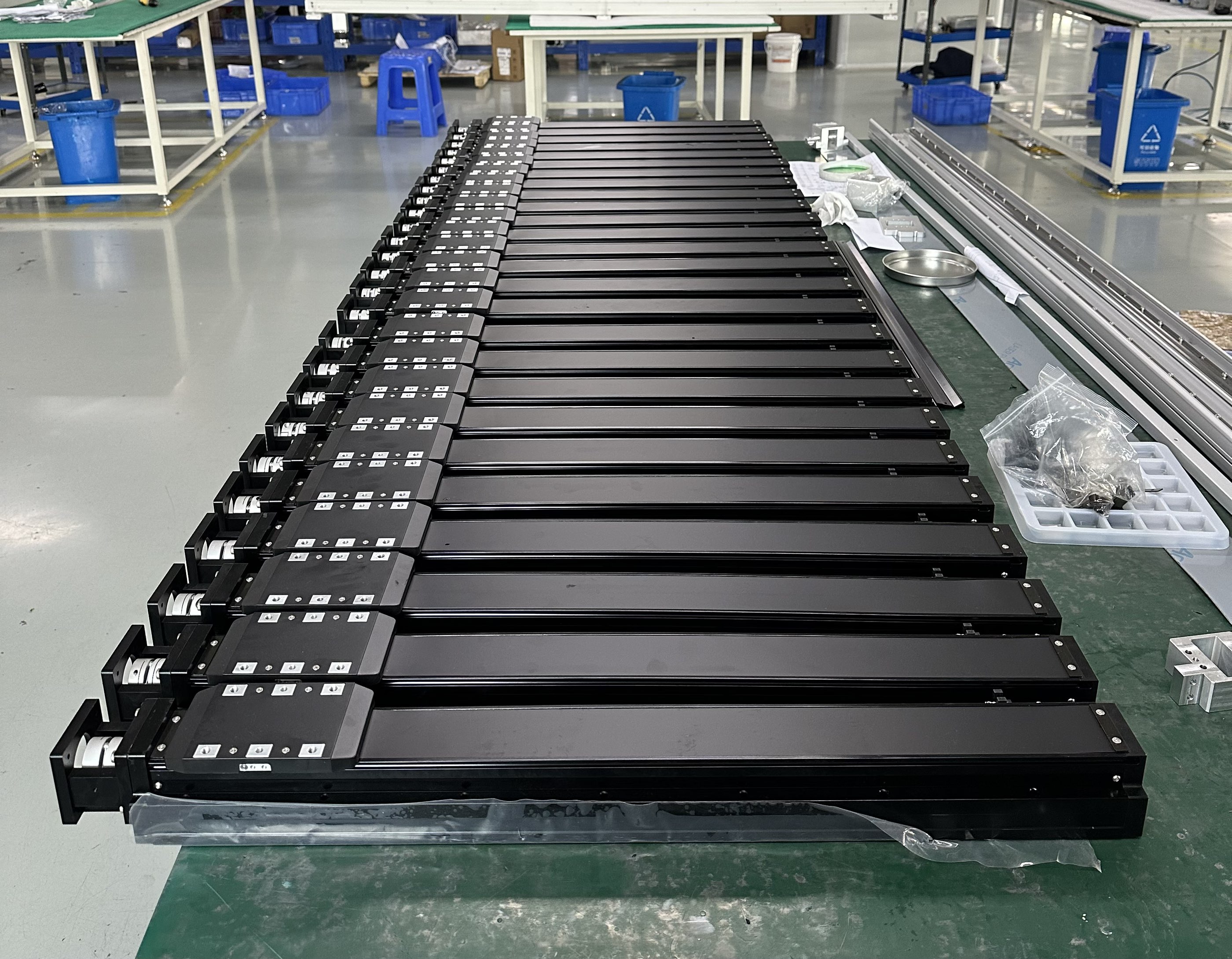

HIGH-TECH ENTERPRISE
AUTOMATED PRODUCTION
Contact Us
> Whatsapp: +86 13360462722
> Email: [email protected]
> Address: 9th Floor, Zone C, Songhu Zhigu
Industrial Building, No. 9 Yanhe South Road, Liaobu
Town, Dongguan City
China Site: wrobot.top · Linear Module Factory & Online Quote
China Site: wrobot.top · Linear Module Factory & Online Quote
Copyright © 2025 ShenZhen W-Robot Industry Co.,Ltd. All Rights Reserved.