

Contact us
If you are interested in cooperation, please contact us immediately, we will give you feedback as soon as possible!


24
2025
-
12
Fully-Enclosed Linear Motor Modules for Challenging Environments
Author:
In this article, we’ll unpack what these modules really are, where they differ from semi-enclosed or traditional designs, and when it’s worth specifying a fully enclosed linear module for your next project.
1. Why “Normal” Linear Axes Struggle in Harsh Environments
Most factories don’t look like lab brochures. They look like this:
Fine dust or powder (battery, PV, machining, packaging).
Spray, mist or fumes (coolant, solvents, flux, cleaning agents).
Limited maintenance windows, especially on high-OEE lines.
In these conditions, traditional axes reach their limits:
A ball screw axis pulls dust into the threads and guides; grease turns into grinding paste.
An open linear motor module exposes magnets, coils and scales to dust and liquid.
External cable chains and sensors become weak links you end up troubleshooting repeatedly.
You can throw covers and shields at the problem.
But at some point, the only robust answer is: design the axis itself as a protected system.
That’s the core idea behind a fully enclosed linear module.
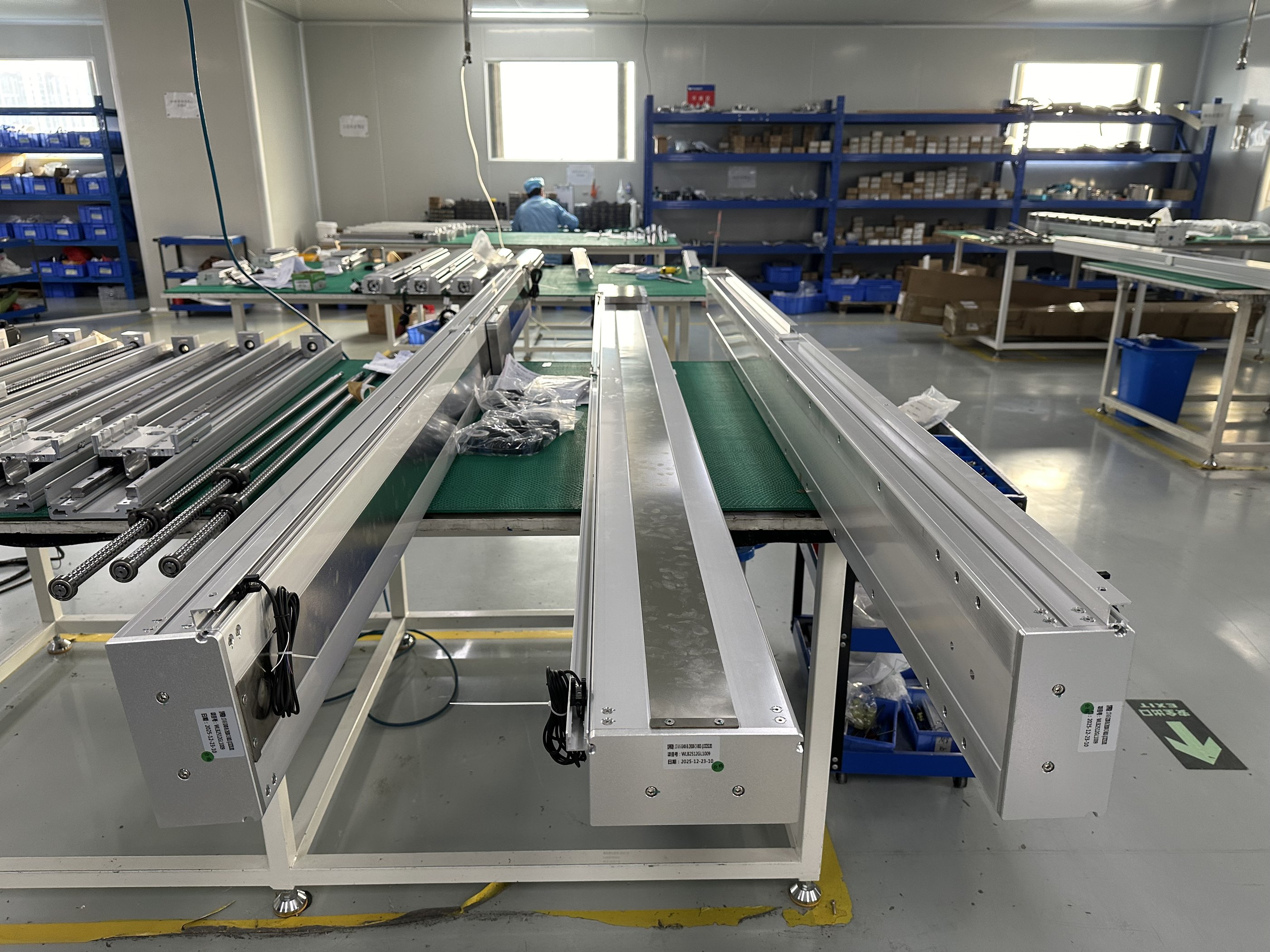
2. What Is a Fully-Enclosed Linear Motor Module, Exactly?
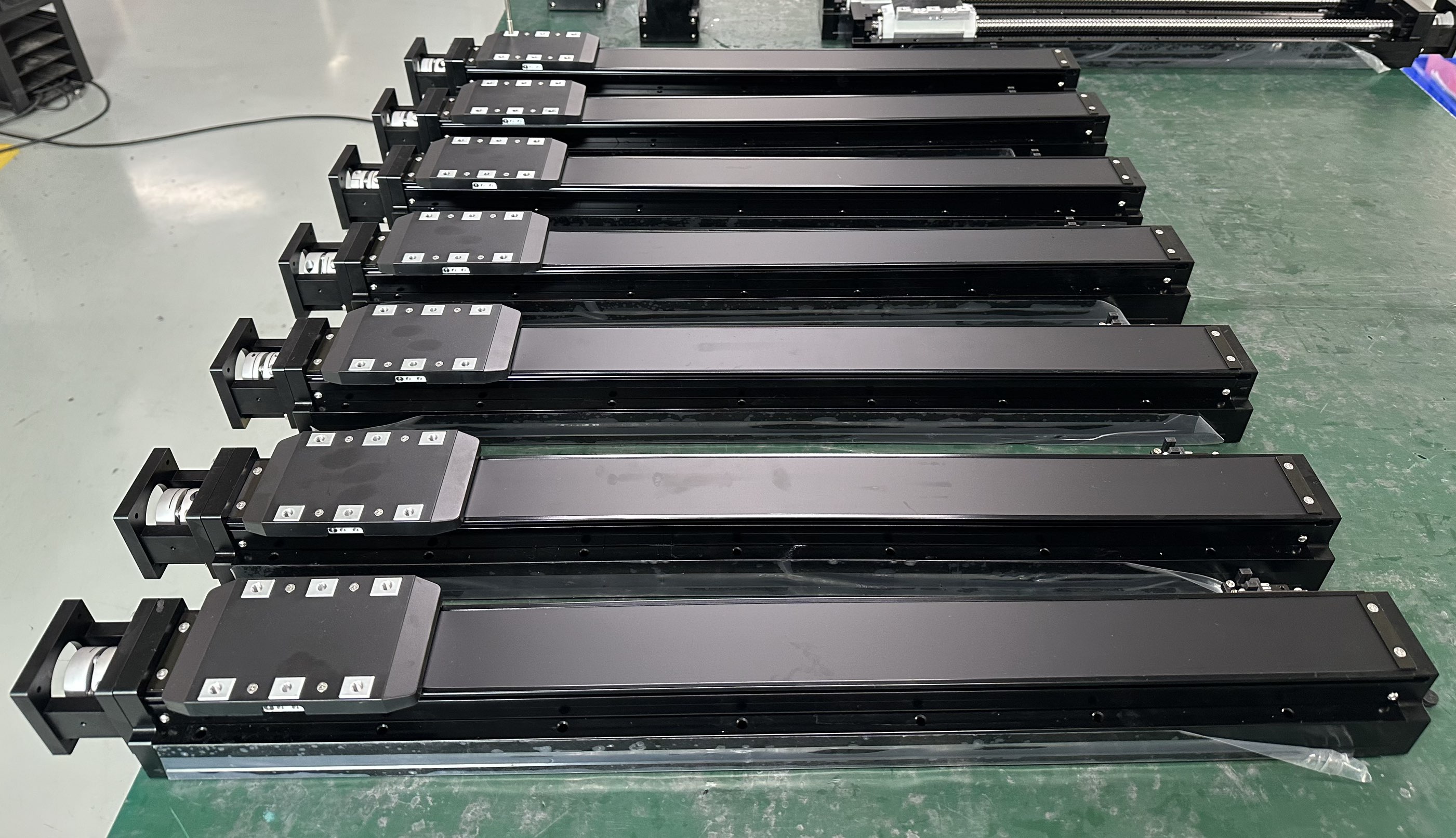
Think of a fully-enclosed module as a “motion system in a sealed box”.
Inside a rigid housing, you’ll typically find:
A linear motor module (iron-core or coreless) – the coil and magnetic track.
One or more precision linear guide rails carrying the load.
A linear scale or encoder protected from direct contamination.
Cable routing and sometimes cooling channels, all integrated into the body.
On the outside, you see:
A smooth, easy-to-clean profile.
A carriage or top plate for mounting your tooling, robot gripper or electric cylinder.
Minimal exposed mechanics – no open screws, belts or magnets.
In W-Robot’s portfolio (Shenzhen W-Robot Industry Co.,Ltd – www.w-robot.com), this philosophy is embodied in fully-enclosed linear motor modules designed specifically for dusty, splash-prone or semi-clean environments where ordinary axes simply don’t last.
3. Three Design Pillars: What You’re Really Paying For
3.1 Environmental Protection: Dust, Mist and Particles
A fully enclosed linear module is not just a standard axis with a cosmetic cover. The housing and sealing system are designed from the outset to:
Block dust and fine powder from reaching rails, coils and encoder.
Deflect spray or droplets away from critical components.
Present a continuous, cleanroom-friendly geometry that’s easy to wipe down.
Depending on configuration, that can give you:
A more dustproof linear module for battery, PV, machining or packaging.
A cleanroom linear module suitable for higher-grade environments, where particle control is important but you still need strong dynamics.
The net effect: your maintenance intervals become predictable instead of reactive.
3.2 Stable High-Speed Positioning
When you enclose a linear motor module properly, you keep its core advantage:
Direct drive along the axis (no screw, no belt).
High acceleration and velocity without mechanical backlash.
Short settling times, even under demanding motion profiles.
That matters in stations such as:
High-speed inspection and AOI.
Coating, dispensing or laser processing.
Fast pick-and-place with tight position windows.
In many of these jobs, you’re buying not just speed, but consistent high-speed positioning:
the ability to run aggressive profiles all day without the axis slowly degrading under dust and vibration.
3.3 Integration and Serviceability
A common fear about fully-enclosed systems is, “Will this be painful to integrate or service?”
Good designs, like those from W-Robot, answer this in a few ways:
Standard mounting interfaces on the base and carriage.
Clear access to electrical connections and, where needed, cooling ports.
Service procedures that don’t require dismantling half the machine.
You still get a compact, modular linear module for automation that behaves like a normal actuator from the outside – it just hides the complexity and vulnerability inside a more durable shell.
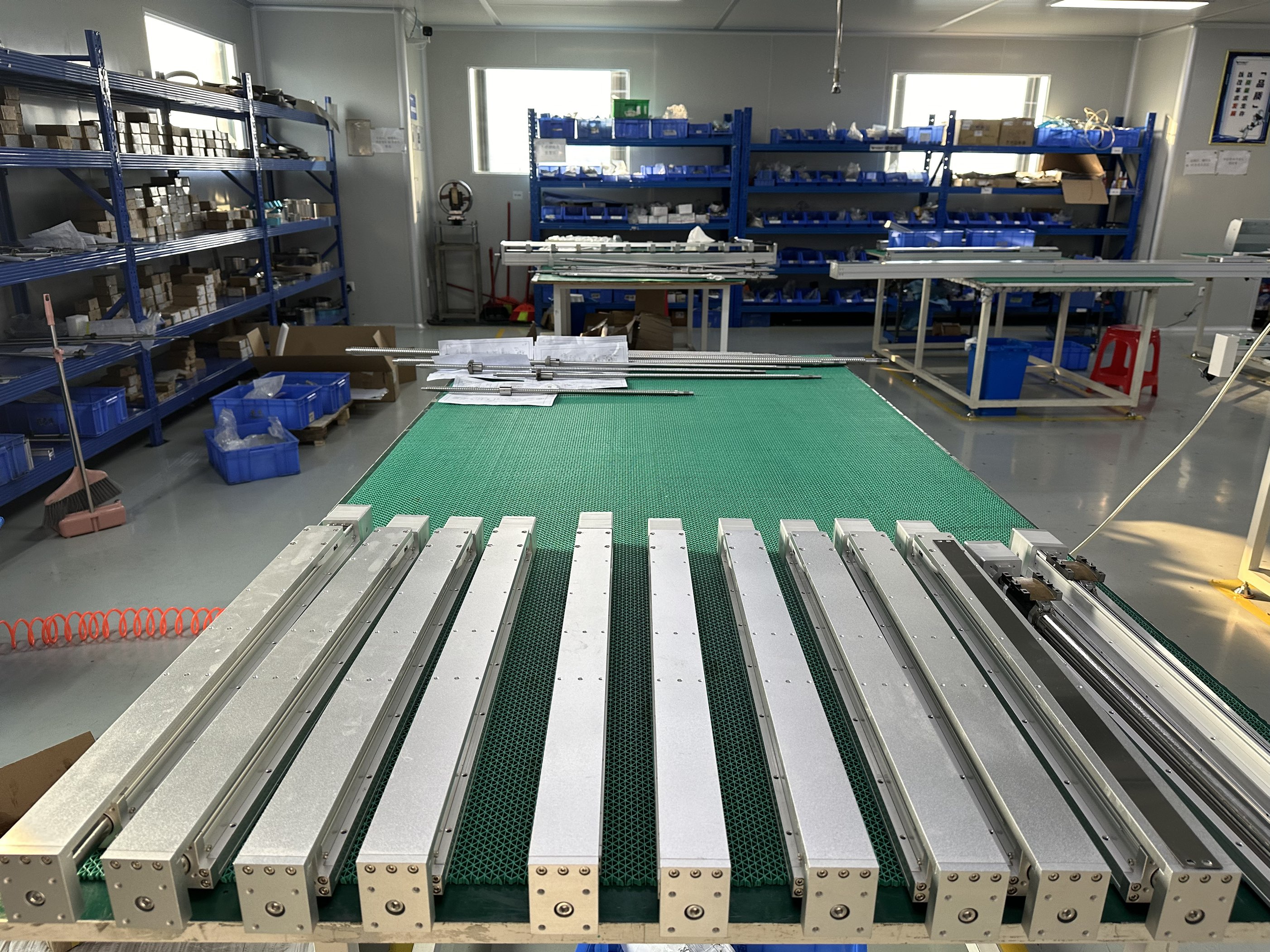
4. Where Fully-Enclosed Linear Motor Modules Make Sense
Not every axis deserves this level of protection. But some are perfect candidates.
4.1 Battery and PV Production Lines
In battery production lines and PV back-end processes, you’ll often see:
Conductive dust and fine powders.
Sticky coatings and solvents.
24/7 duty with limited shutdowns.
Here, a fully enclosed linear module used as a linear actuator for battery production line can:
Keep contamination away from magnets and scales.
Maintain precise positioning for coating, inspection and sorting.
Reduce the number of unplanned stops caused by axis errors.
You can still use more conventional ball screw or belt modules for heavy, slower transport. The fully-enclosed linear motor axes go where dust and uptime pressure are highest.
4.2 Semiconductor, Electronics and Inspection Equipment
In semiconductor equipment and advanced electronics manufacturing, the motion system often sits at the center of a clean but not perfectly sterile environment:
High-value wafers or panels.
Dense IO, cabling and vision systems.
Tight demands on repeatability and trajectory quality.
An open linear motor can technically deliver the dynamics, but:
particles on the scale or rail can quickly ruin measurement repeatability,
maintenance inside a tool is expensive and tightly controlled.
A fully-enclosed linear module for semiconductor equipment:
provides the needed motion performance,
makes particle management easier,
and reduces the risk that your motion system becomes the weakest link in an otherwise well-controlled process.
4.3 Medical, Pharma and Clean Packaging
In medical device automation or pharma blister / vial lines, you may be dealing with:
Clean surfaces and frequent wipe-down,
Proximity to open product or sterile paths,
The need for reliable, quiet motion near operators.
A cleanroom linear module with full enclosure:
protects mechanics from cleaning agents and drips,
minimizes crevices where particles can accumulate,
offers high-speed positioning for inspection, filling or assembly tasks.
Again, you don’t have to upgrade every axis. It’s about choosing the critical few.
5. Fully-Enclosed vs Semi-Enclosed vs “Standard”: A Simple Rule of Thumb
When should you specify a fully-enclosed design instead of semi-enclosed or standard modules?
Ask three quick questions for each axis:
If this axis fails, does the whole line stop?
If yes, reliability matters more than saving a few dollars up front.
Is the local environment either very dusty, very clean, or exposed to liquids?
If yes, sealing and surface design become central to the choice.
Am I pushing for real high-speed positioning here?
If yes, combining linear motor dynamics with strong environmental protection is often the best long-term value.
If you get two or three “yes” answers, a fully enclosed linear module is worth a serious look.
If you get mostly “no”, a semi-enclosed linear motor or classic ball screw module may still be the smarter move.
linear motor module,,fully enclosed linear module,cleanroom linear module,ball screw,robot gripper , electric cylinder ,linear guide rail ,ball screw drive ,timing belt drive

HIGH-TECH ENTERPRISE
AUTOMATED PRODUCTION
Contact Us
> Whatsapp: +86 13360462722
> Email: [email protected]
> Address: 9th Floor, Zone C, Songhu Zhigu
Industrial Building, No. 9 Yanhe South Road, Liaobu
Town, Dongguan City
China Site: wrobot.top · Linear Module Factory & Online Quote
China Site: wrobot.top · Linear Module Factory & Online Quote
Copyright © 2025 ShenZhen W-Robot Industry Co.,Ltd. All Rights Reserved.