

Contact us
If you are interested in cooperation, please contact us immediately, we will give you feedback as soon as possible!


14
2026
-
01
Building Multi-Axis Transfer Systems for Automated Sorting Lines
Author:
Would you like me to provide a free CAD model for your specific multi-axis configuration or send you our 2026 Linear Module Selection Guide?
Engineering High-Performance Multi-Axis Transfer Systems for Automated Sorting Lines
In modern factory floor design, the transition from manual sorting to fully automated multi-axis systems is often fraught with engineering trade-offs. For most mechanical designers, the challenge isn't just "making it move"—it’s achieving a balance between high-speed throughput and long-term reliability within a tight footprint. Whether you are dealing with inconsistent cycle times or the high maintenance costs of pneumatic components, selecting the right drive mechanism is critical.
At W-Robot, we understand that a sorting line is only as strong as its weakest axis. This guide explores how to integrate linear guide rails, ball screw drives, and timing belt drives to build a robust transfer system that simplifies smart manufacturing.
1. Choosing the Right Drive Mechanism: Ball Screw vs. Timing Belt
The foundation of any multi-axis system is the drive type. Depending on your sorting line's stroke length and precision requirements, the choice usually falls between a ball screw drive and a timing belt drive.
Technical Comparison Table
| Feature | Ball Screw Drive | Timing Belt Drive |
|---|---|---|
| Repeatability | High ($\pm 0.01$ mm to $\pm 0.02$ mm) | Moderate ($\pm 0.04$ mm to $\pm 0.1$ mm) |
| Max Stroke | Limited (typically up to 2500mm) | Long (up to 5000mm+) |
| Max Speed | Moderate (< 1000 mm/s) | High (up to 5000 mm/s) |
| Load Capacity | Very High | Moderate |
| Main Application | Precision positioning, vertical Z-axis | High-speed long-range horizontal transfer |
2. The Core Components of a Sorting Robot
To build a 3-axis (XYZ) transfer system that lasts, engineers must focus on three "pillars" of hardware:
The Support: LM Guide & Linear Guide Rail
A high-quality lm guide (Linear Motion guide) ensures that the system handles moment loads (pitch, roll, and yaw) without vibrating at high speeds. Using a dual linear guide rail setup on the base axis provides the structural rigidity needed to prevent "crabbing" during rapid acceleration.
The Muscle: Electric Cylinder
Replacing traditional pneumatics with an electric cylinder for the Z-axis or pushing mechanism offers programmable intermediate stops and smoother deceleration. This drastically reduces product damage during fragile sorting tasks and eliminates the need for constant air pressure maintenance.
The Interface: Robot Gripper
The robot gripper is the final touchpoint. Whether it is a vacuum suction manifold or a high-speed servo gripper, the integration with the linear module must be seamless to ensure the total "End of Arm Tooling" (EOAT) weight does not exceed the payload capacity of the X and Y axes.
3. Application Scenarios: Where Precision Meets Speed
Scenario A: 3C Electronics Sorting
In smartphone assembly, components are small but require extreme precision. A multi-axis system utilizing ball screw driven modules ensures that parts are placed with micron-level accuracy. W-Robot’s compact series is specifically designed for these space-constrained environments, offering high power density.
Scenario B: New Energy Battery Cell Handling
Battery production involves heavy loads and long transfer distances. Here, a timing belt drive combined with heavy-duty linear guide rails allows for the rapid movement of cells across 4-meter spans, significantly boosting the Parts Per Minute (PPM) of the production line.
4. The W-Robot Advantage: Beyond the Component
Building a sorting system is more than just buying parts; it's about system integration. W-Robot (ShenZhen W-Robot Industry Co., Ltd.) provides:
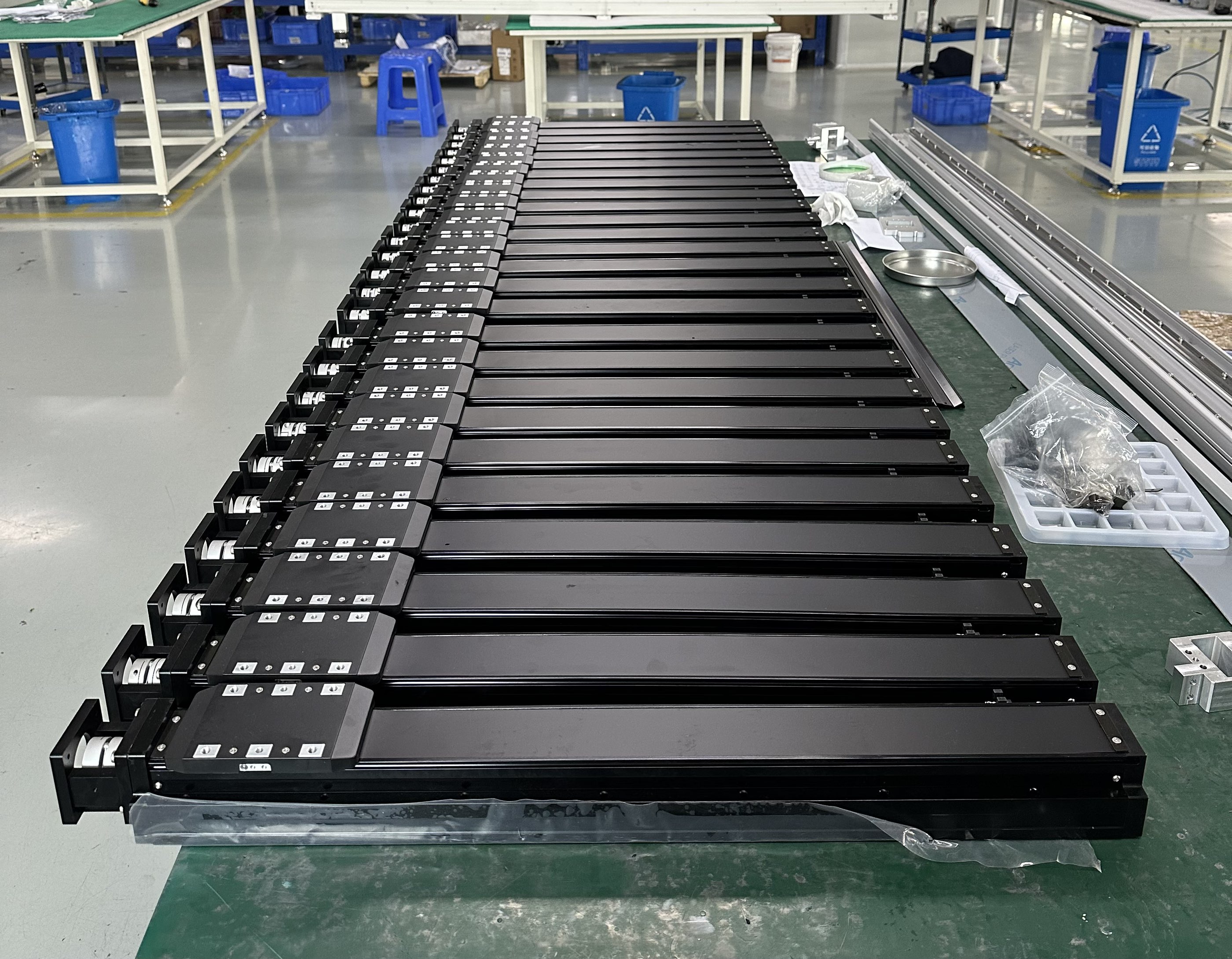
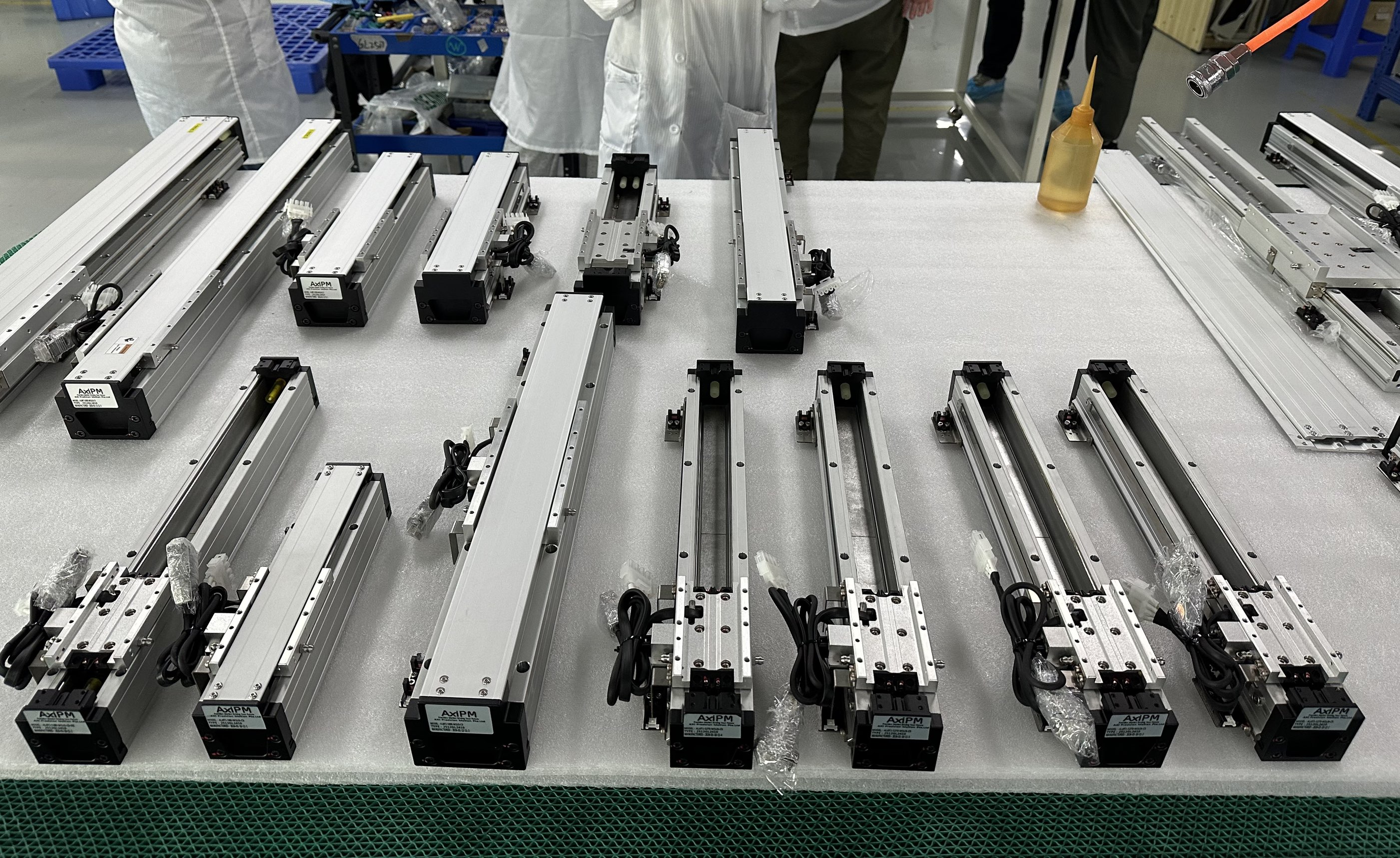
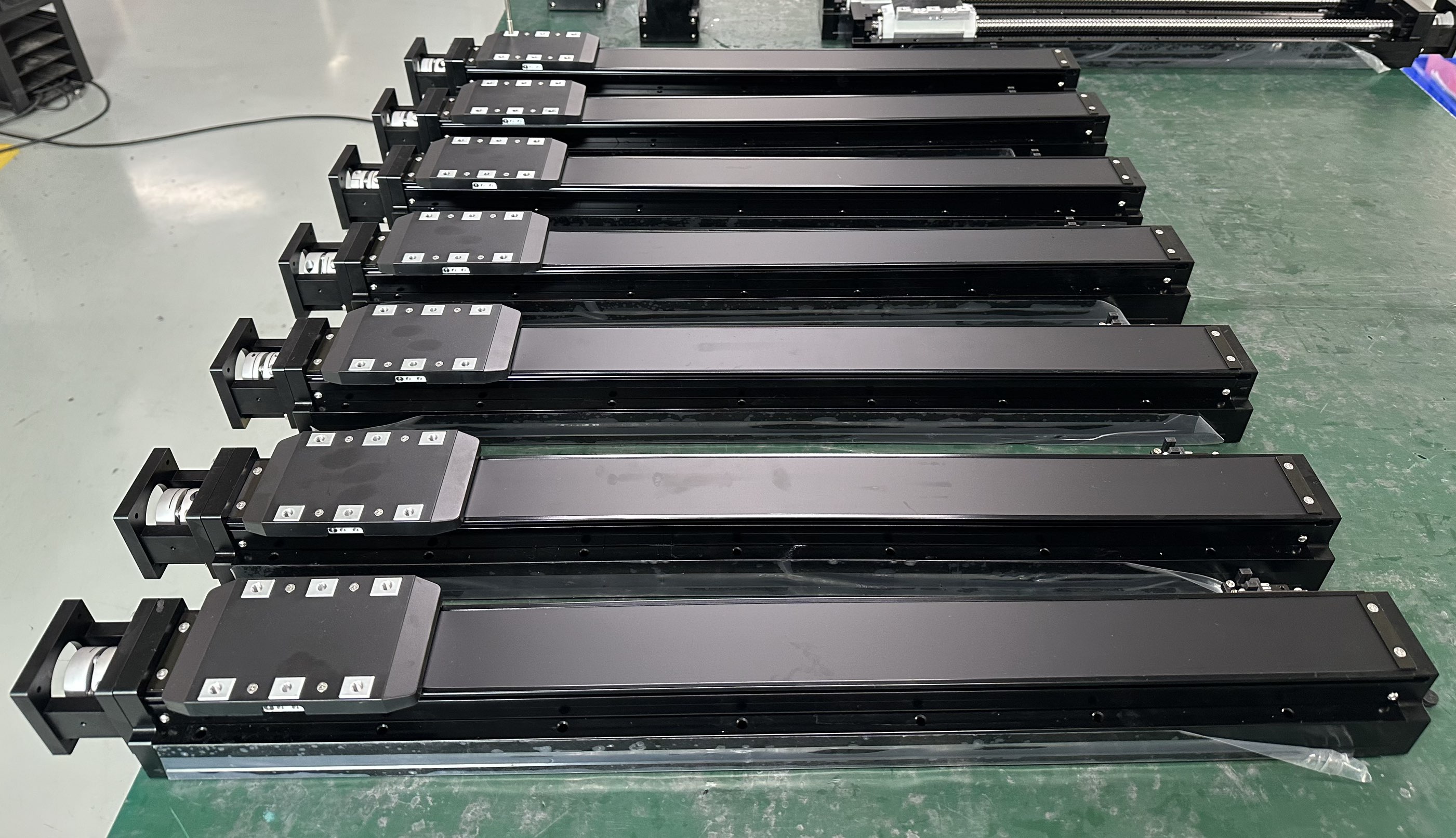
Self-Developed Technology: Our linear modules are engineered for "Smart Manufacturing Simpler" (SMS), ensuring compatibility between motors and mechanical structures.
Customization: We offer non-standard stroke and multi-axis combinations tailored to your specific factory layout.
Rapid Availability: With a robust supply chain, we minimize lead times, helping you get your line up and running faster.
Conclusion: Optimizing Your Sorting Efficiency
A successful multi-axis transfer system requires a holistic approach—choosing the precision of a ball screw where it matters and the speed of a timing belt where it counts. By utilizing premium lm guides and transitioning to electric cylinders, you can build a system that is not only efficient but also low-maintenance.
Ready to optimize your automated sorting line?

HIGH-TECH ENTERPRISE
AUTOMATED PRODUCTION
Contact Us
> Whatsapp: +86 13360462722
> Email: [email protected]
> Address: 9th Floor, Zone C, Songhu Zhigu
Industrial Building, No. 9 Yanhe South Road, Liaobu
Town, Dongguan City
China Site: wrobot.top · Linear Module Factory & Online Quote
China Site: wrobot.top · Linear Module Factory & Online Quote
Copyright © 2025 ShenZhen W-Robot Industry Co.,Ltd. All Rights Reserved.